


 Login
 Login
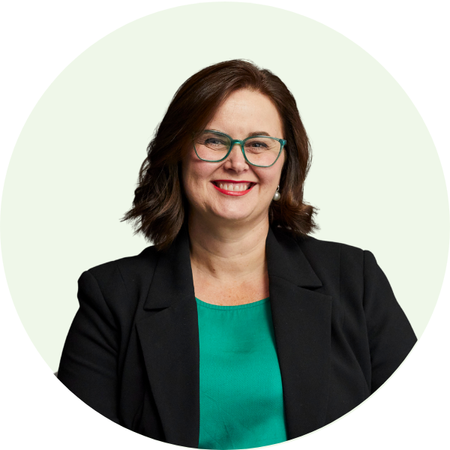
Public consultation on Australia’s next open government plan is open until Friday 6 November. I am asking organisations across our sector to respond, even briefly.
Open government sounds like something that matters mostly to public servants, integrity experts and people who spend a lot of time thinking about freedom of information laws. But it has very real consequences for our sector.
It determines whether communities can see the information the government uses to make decisions and whether people affected by a policy get a meaningful say.
We see the consequences when consultation happens too late to change anything. We see them when funding decisions arrive without enough notice for organisations to plan.
Confidence in government remains fragile.
Just over half of Australians trust government to do what is right. One way Australia is trying to improve this is through the Open Government Partnership, which I joined this year.
Participating countries develop national action plans with specific commitments to make governments more transparent, participatory and accountable. Government and civil society develop those plans together, and their progress is independently assessed.
Australia is now developing its Fourth National Action Plan, known as NAP4.
In May, I was appointed as one of six civil society members of Australia’s new Open Government Forum. We sit alongside an equal number of government representatives and will work together to develop, implement and monitor the next plan which is due by the end of 2026 and will run from January 2027 to December 2028.
For NCOSS, the opportunity is straightforward: bring what our sector sees every day into a process that sets specific commitments for how government operates.
Our members see where systems work and where people fall through them. They see which forms are impossible to understand and which consultation processes genuinely influence a decision rather than simply validate one already made.
If the next plan is going to be different, participation itself has to improve.
Earlier this year, NCOSS worked with organisations across the community sector to put forward five priorities for NAP4: an official, regularly published measure of poverty; a properly supported role for people with lived and living experience in government decisions, with consultation open by default; better small-area data and two-way data partnerships, with Indigenous Data Sovereignty built in; published funding and commissioning timelines, and freedom to advocate without fear of losing funding; and the right to know about and challenge automated decisions, without anyone losing access to services because they are offline.
The Forum has now shortlisted seven proposed commitments for public comment. The feedback will decide which ones make the final plan and what they contain, before the government gives its approval.
The survey also invites suggestions to improve each commitment. Members can ask for changes that would make a meaningful difference to their community and their organisation.
Better government decisions often depend on what happens well before a policy announcement or a funding decision: who was asked, what evidence was available, whether the public could see it and whether organisations could speak freely. Once the government makes a commitment, trust depends on whether anybody can tell if it was kept.
Please respond to the consultation by Friday 6 November. You can comment on a single commitment if that is where your experience lies, and you can respond anonymously.
Everything is at consultations.ag.gov.au/integrity/ogp-fnap, including a plain English version of the consultation paper and a Word version of the survey for drafting offline. If you cannot use the online survey, email the completed Word version to opengovernment@ag.gov.au.